Or a National Summary of Food Deserts
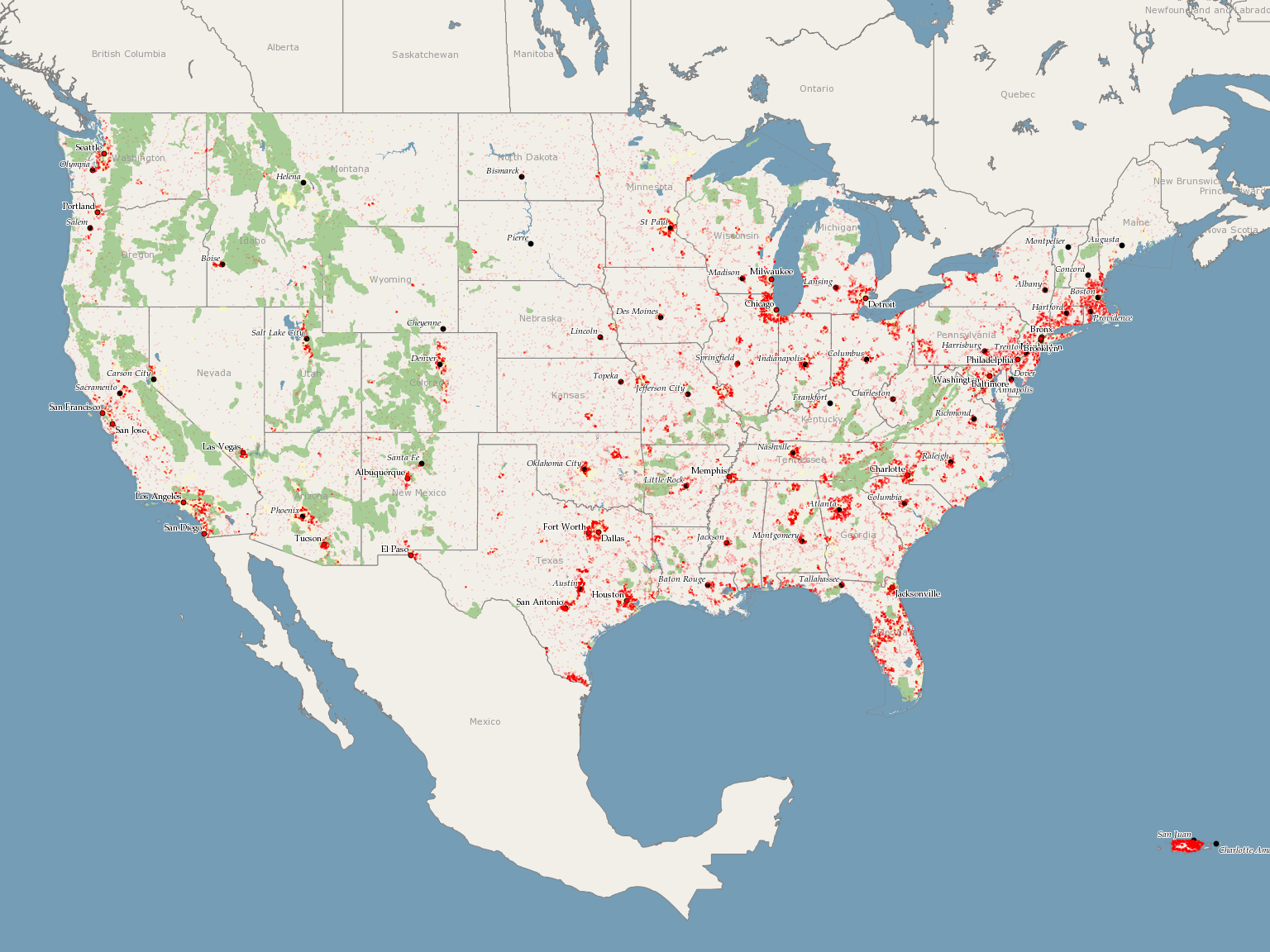 Food Deserts, areas that are a longer than normal distance to grocery stores, have been an ongoing topic in politics and demographics for a while now. I first heard about the concept when Rahm Emanuel started talking about it in his run for mayor of Chicago. I have continued to see articles and blog posts about it and every time I think that Alteryx would make it much easier to create a more nuanced analysis.
They say a picture is worth a thousand words, so I wanted to start with a map. As I explored in Dot Density Maps, mapping a phenomenon that without exaggerating rural areas can be very hard. Look at some of the other maps online: here, here, here, etc… They all show the problem seemingly as a rural problem. To be fair, a lot of blogs are looking at it from a socioeconomic or health point of view and rural areas do play a large part. In the map on the left (click for a larger version) each dot represents 500 people in a Food Desert. It becomes clear that the issue is primarily a suburban issue. There is a ring around almost every city of food desert. From an environmental point of view, this is a disaster. It becomes impossible to walk or ride a bike to get food, so that much more gas is burned and that much more time is wasted sitting in traffic.
 Inspiring Ingenuity
